


Database Change Governance
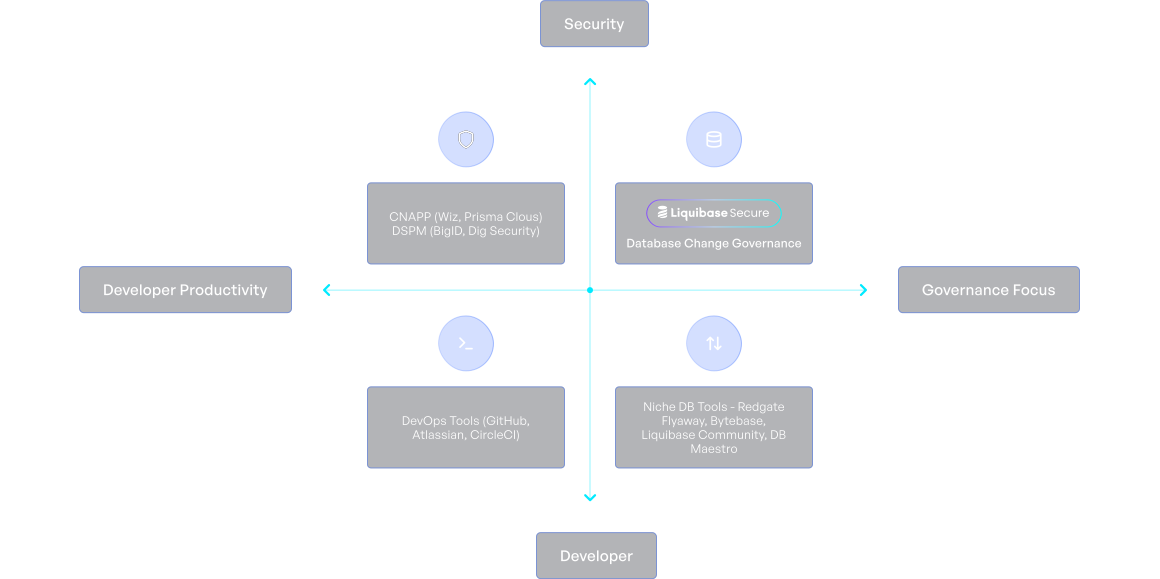
Database Change Governance is the discipline of making every schema change validated before release, controlled through automation, monitored for drift, and provable for audit.
When the schema layer changes, everything downstream can feel it. Pipelines fail. Dashboards drift. Models break. Governance reduces that risk by enforcing rules early, standardizing delivery, and keeping a clear record of what changed over time.
.svg)

Database Change Governance:
Where Speed Meets Control
Governance is measurable
Governance is not a feeling. It’s outcomes you can track and improve over time. These five metrics form the Database Change Governance scoreboard.


The pillars of Database Change Governance
Database Change Governance is built on five pillars. Each maps to a real failure mode teams face at scale and to the metrics above.

.svg)


Schema Change
Use cases
Database Change Governance shows up differently depending on your mandate. Pick the use case that matches what you are accountable for, then dive into the pillars behind it.

Compliance and Audit

Database Security

Developer Self Service

Observability

AI Ready Databases
Start with One Pipeline, then Scale
FAQ
It’s how teams make schema change safe and repeatable, with rules enforced automatically and proof captured by default. It reduces outages, failed releases, and audit scramble by standardizing how change is validated, deployed, monitored, and recorded.
Database Change Management focuses on the process of planning and executing changes. Database Change Governance adds automated controls, drift visibility, recovery discipline, and audit evidence so the process is measurable and enforceable at scale.
Database DevOps focuses on automating delivery workflows. Governance focuses on control and proof: policies that run before deployment, continuous drift detection, recovery readiness, and evidence that stands up in audits.
Good governance speeds teams up. It catches issues earlier, reduces late stage surprises, and prevents the release failures that cause the biggest delays.
Drift is any change in the database that is not reflected in the approved workflow. Manual edits, emergency fixes, and out of process changes all count.
Start with one application or one data product pipeline. Define a small policy set, enable drift detection, and standardize deployment. Then expand once the workflow is proven.
It improves Automated Evidence Coverage by capturing what changed, who approved it, what checks ran, when it executed, and the outcome across environments. Evidence becomes a byproduct of delivery, not a quarterly project.
AI increases the speed and volume of change. Governance ensures AI authored changes follow the same policies, approvals, and evidence collection as human changes, by default.
Migration tools help execute changes. Governance focuses on enforceable pre deployment controls, drift visibility after deployment, recovery discipline, and provable evidence. Execution is necessary, but not sufficient at scale.
No. Governance should integrate into how teams already deliver changes, adding consistent checks and traceability without forcing a new delivery model.


